







Business VoIP: The Complete Guide


.avif)

Business VoIP and Hosted Telephony: The Complete Guide
Phone systems used to be one of the most boring decisions a business made. That changed the moment hosted VoIP arrived, because suddenly the phone system stopped being a box in a cupboard and became a piece of software that could scale, integrate and move with your business. This guide pulls together everything we've written on the subject into one place, so whether you're weighing up your first move away from a traditional phone line or trying to understand the security implications of the switch, you've got the full picture in one spot.
What is hosted VoIP and why does it matter
Voice over Internet Protocol converts voice into digital packets and sends them over the internet rather than a traditional phone line. A hosted VoIP system takes that a step further by moving the infrastructure itself off site, into a provider's data centres, so your business gets the phone system without the cupboard full of hardware, the maintenance contracts, or the engineer call-outs when a line card fails. Instead, your handsets, softphone apps and desk phones all connect out to your provider's platform over your existing internet connection, and the provider handles the switching, the call routing and the uptime.
For most SMEs this is a genuinely bigger shift than it first appears. A traditional PBX ties your phone number, your call handling logic and your physical location together in a box that sits in a comms cupboard, ages, and eventually needs replacing at real capital cost. Hosted VoIP separates all three, so your main number can ring in London and be answered in Colchester, your call routing can change with a few clicks rather than an engineer visit, and there's no hardware refresh cycle to budget for every five to seven years. If you want the fuller technical picture, our guide on what a VoIP service provider actually does covers the mechanics in plain English, and our piece on the difference between VoIP and cloud based phone systems untangles a distinction that trips a lot of businesses up, since the two terms get used almost interchangeably despite meaning different things.
The benefits businesses actually notice
Cost, scalability and features are where most businesses feel the difference first, usually within the first billing cycle. On cost, there's no large upfront hardware spend and no engineer visit every time you add a desk, since a new user is a licence added in a portal rather than a physical extension wired in. On scalability, seasonal businesses can flex headcount up and down without being locked into hardware sized for peak demand, and multi-site businesses can run every location off one system with shared call handling rather than treating each office as a separate telecoms problem. On features, things that used to be reserved for large enterprises with dedicated telecoms budgets, call recording for compliance and training, auto attendants that route callers without a receptionist, CRM integration that pops a customer's record on screen the moment they call, are now standard inclusions rather than expensive add-ons. Our breakdown of the main benefits of hosted VoIP goes through each of these in more depth with real cost comparisons.
Our two flagship VoIP products
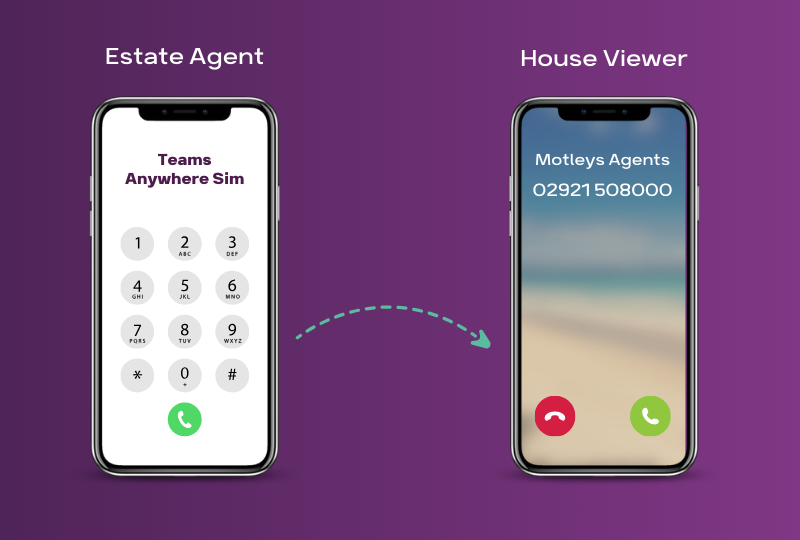
Everything in this guide points toward two products we'd put forward as the right starting point for most businesses. FloCX Pro Ai is our AI-powered business comms platform, unifying calling, messaging, meetings and CRM integration in one place and built on Cisco Webex, designed for teams that need to move fast and want intelligence layered on top of the basics, call summaries, sentiment insight and automated follow-ups rather than just a dial tone in the cloud. For businesses already living inside Microsoft 365, Microsoft Teams Phone takes a different route to the same outcome, enabling full VoIP calling directly inside Teams with CRM integration and no extra hardware required, so your phone system sits exactly where your team already spends its day rather than being one more app to switch into. Which one fits depends largely on whether you want a dedicated comms platform or want calling folded into Teams itself, and it's worth talking through with us before committing either way.
Cloud versus on premise: making the right call
Not every business should default to cloud without thinking it through. Some, particularly those with very specific compliance requirements, poor or unreliable internet connectivity at their site, or existing on premise investment that still has useful life left, have a reasonable case for keeping infrastructure on site a while longer. The honest answer is that it depends on your connectivity resilience, your compliance obligations, and how much of your existing hardware is already paid off versus due for renewal. We weigh up both sides properly, including the total cost of ownership over a five year window rather than just the sticker price on day one, in cloud based phone systems versus on premise options.
Making the switch without the headache
Moving from a traditional phone system to VoIP involves four main stages: choosing a provider, porting your existing numbers across, provisioning hardware or softphone apps for your team, and training staff on the new system. Number porting is usually the part that worries businesses most, since nobody wants a dropped call or a dead line during the switch, but with proper planning it happens as a clean cutover with little to no downtime. The realistic timeline from decision to go-live is typically two to six weeks depending on the number of sites and users involved. We've laid out the whole process, including what can go wrong and how to avoid it, in our step by step guide to switching to a VoIP provider, so you know what to expect before you start rather than partway through.
Security is not optional
VoIP runs over the same internet connection as everything else in your business, which means it needs the same level of scrutiny as any other system handling sensitive data, not the light-touch treatment phone systems used to get when they were physically separate from your IT network. Call hijacking, toll fraud and eavesdropping are all real risks on an improperly secured VoIP deployment, and the fixes, encrypted signalling, strong authentication on every endpoint, and proper network segmentation, are well understood but still skipped surprisingly often. Our complete guide to VoIP data security covers encryption protocols, authentication and the practical steps that keep calls private, particularly important if your business handles client data or falls under regulatory requirements like GDPR. It's worth reading alongside our wider cyber security services, since a phone system is only as secure as the network it sits on, and a VoIP deployment bolted onto a poorly secured network inherits every one of that network's weaknesses.
Where hosted VoIP fits with managed IT
For most businesses, VoIP isn't a standalone decision, it's one part of a wider technology setup that includes networking, cyber security and day to day IT support, and treating it as separate from the rest of your IT stack is where a lot of the friction in a poorly planned rollout comes from. Bundling hosted VoIP in with managed IT support means one provider is accountable for the whole stack, network performance, call quality, security posture and user support, rather than you juggling a phone supplier, an IT supplier and a security supplier who don't talk to each other and each point the finger elsewhere when something breaks.
Our final word
Hosted VoIP has matured from a cost saving gimmick into the sensible default for most UK businesses, and the decision now is less about whether to switch and more about doing it properly, with the right provider, the right security posture and the right integration with the rest of your IT. Whether that means FloCX Pro Ai as a dedicated AI-powered platform or Microsoft Teams Phone built into the tools you already use, if you'd like to talk through what a move to hosted VoIP would look like for your business, get in touch with Flotek.





.jpg)







Schedule a Free IT Audit & Cost Breakdown

Download ‘Your First 60 Days with Microsoft Copilot’ Guide
%20amended%20logo.png)

.avif)
.avif)
%20(1).avif)
.avif)